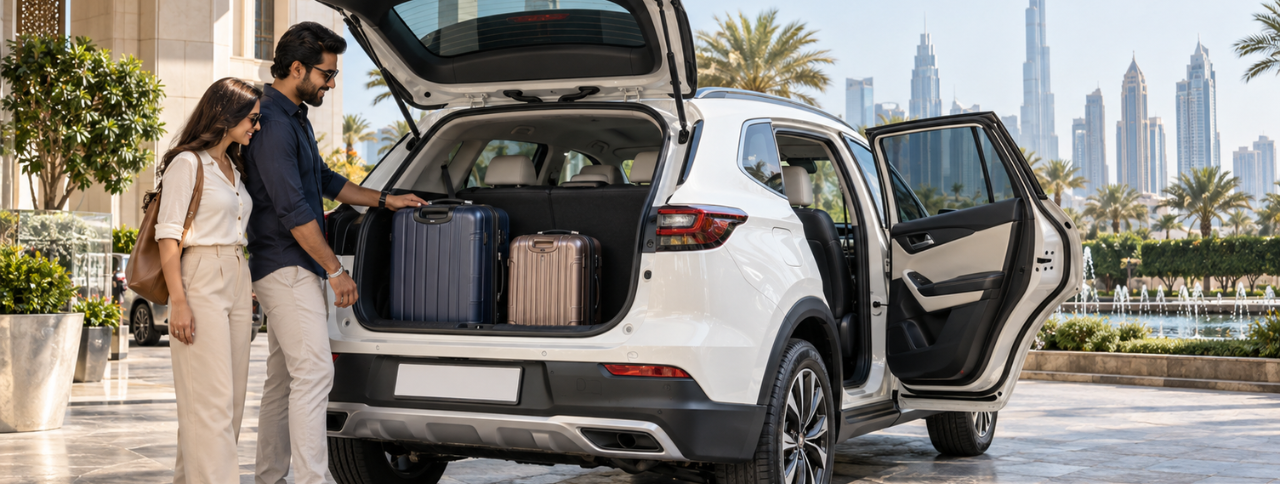
Renting a Crossover in Dubai: Luggage Space, Seating and Features to Check
Table of Content
1.Why Consider a Crossover for Driving in Dubai?
2.Check Luggage Space With the Rear Seats Upright
3.Match the Luggage Layout to Your Passenger Count
4.Check Rear-Seat Comfort Carefully
5.Confirm Child-Seat Compatibility Before Booking
6.Prioritise Air Conditioning and Cabin Comfort
7.Check Features That Make Everyday Driving Easier
8.Verify the Exact Model and Equipment
9.Read the Rental Terms Alongside the Vehicle Details
10.Inspect the Vehicle Before Leaving
11.Conclusion
Choosing a rental car becomes easier when you know what needs to fit inside it. Renting a Crossover in Dubai: Luggage Space, Seating and Features to Check covers the practical details that can make a difference to your journey, from fitting airport suitcases to keeping rear-seat passengers comfortable. Whether you are visiting Dubai with family, travelling for work or arranging a vehicle for everyday use, a crossover may offer a useful balance of passenger space and manageable dimensions.
However, appearance alone does not tell you how practical a vehicle will be. Two crossovers can look similar outside but offer different boot layouts, rear-seat space and equipment. Before booking, focus on the actual vehicle, your passengers and the luggage you expect to carry.
Why Consider a Crossover for Driving in Dubai?
A crossover generally combines a car-based design with a taller body and a raised seating position. Depending on the model, this can provide comfortable access, flexible luggage storage and a useful view of surrounding traffic.
For a Dubai visit involving airport transfers, shopping, meetings and family outings, these qualities can be helpful. A crossover may provide the flexibility you want without requiring a much larger vehicle.
Still, the category includes different sizes. A compact crossover may suit a couple with modest luggage, while a larger model may be more appropriate for a family. Choose according to your actual requirements, particularly when every passenger seat will be occupied.
1. Check Luggage Space With the Rear Seats Upright
One of the easiest booking mistakes is relying on a boot-capacity figure without checking how it was measured. Manufacturers may publish luggage volumes for different seating arrangements, including a larger figure with the rear seats folded.
If passengers need those seats, the expanded figure is not useful for your journey.
Ask the rental provider about boot space with all required seats in use. Describe your luggage clearly: two large suitcases, two cabin bags and a stroller is more useful information than “four bags.”
Also leave room for anything you might add during your stay. The AA’s rental-car guidance specifically recommends considering additional purchases when assessing luggage requirements. Source: The AA
Look Beyond the Litre Figure
Boot shape can matter as much as stated capacity. A wide, relatively square compartment may accommodate rigid suitcases more conveniently than a space with awkward corners.
Check these details:
- Boot opening: Is it wide enough for your largest suitcase?
- Loading height: Can you lift heavy bags in comfortably?
- Wheel-arch intrusion: Does it reduce usable width?
- Sloping rear window: Does it limit stacking space?
- Luggage cover: Can it close over your belongings?
Ask for photographs of the actual boot if the listing does not show it clearly.
2. Match the Luggage Layout to Your Passenger Count
A car advertised with five seats does not automatically have enough luggage room for five travellers. Seating capacity and baggage capacity are separate considerations.
For example, two adults may be able to use part of a split-folding rear seat for additional luggage. Four adults travelling with large suitcases will have much less flexibility.
Use this table to guide your questions rather than treating it as a guaranteed capacity chart:
Here are the records in table
If the fit appears tight before departure, discuss a larger vehicle. Starting with enough room is more convenient than repacking bags at collection.
3. Check Rear-Seat Comfort Carefully
Front-seat photographs rarely tell the whole story. Rear passengers may have different levels of legroom, headroom and shoulder space, even in vehicles with similar exterior dimensions.
For a realistic check, position the driver’s seat as the driver would use it, then assess the space behind it. Taller drivers can significantly reduce the room available to rear passengers.
The centre rear seat deserves particular attention. Its cushion may be narrower, and a raised floor section can affect foot space. Three adults might fit for a short journey but find the same arrangement uncomfortable during longer outings.
If you expect to use every seat regularly, ask about rear-bench width and, where possible, inspect the vehicle before accepting it.
Consider Access as Well as Space
Families and older passengers should also consider door openings and the height of the seat cushion. A raised vehicle is not automatically easier for everyone to enter.
Check whether passengers can get in without an awkward climb and whether the rear doors open sufficiently for installing a child seat. These everyday movements can matter more than decorative interior features.
4. Confirm Child-Seat Compatibility Before Booking
If children are travelling, discuss their seating requirements before confirming the rental. Provide their ages and relevant size information so the provider can explain the available child-seat options.
Ask about the attachment system, including ISOFIX where required, and whether the requested seat is suitable for the allocated vehicle. Do not assume every rental includes a child seat or that one will be available without advance reservation.
Two child seats can also reduce the usable space between them. If an adult needs to sit in the middle, confirm whether that arrangement is practical.
Every passenger needs an appropriate seating position and working restraint. Dubai’s official road-safety guidance states that seat belts are mandatory for all passengers. Source: Dubai Government
5. Prioritise Air Conditioning and Cabin Comfort
Air conditioning deserves a practical check when collecting a rental in Dubai. Switch it on, test the fan settings and allow enough time to assess cooling throughout the cabin.
If you are travelling with rear passengers, check whether the vehicle has rear air vents. These can help distribute cooled air, although their presence alone does not guarantee effective cooling.
Also consider the interior materials and controls. Seat comfort, supportive cushions and straightforward temperature adjustments can make daily journeys more pleasant.
A panoramic roof may look attractive in photographs, but check whether it has an effective shade. For a family rental, reliable cooling and comfortable seating are often more useful than appearance-focused extras.
6. Check Features That Make Everyday Driving Easier
A long equipment list is only useful when the features support your plans. Start with the things you are likely to use every day.
Parking Assistance
A reversing camera and parking sensors can help when manoeuvring an unfamiliar vehicle. A 360-degree camera may provide additional visibility, but availability varies by model and trim.
At collection, check that the camera image is clear and that the sensors operate. Familiarise yourself with the vehicle’s dimensions and mirrors before leaving.
Phone Connectivity and Navigation
Confirm whether the vehicle supports Apple CarPlay, Android Auto or another suitable navigation setup. Ask whether the connection is wired or wireless and bring the correct cable.
Pair your phone and set your first destination while parked. This avoids having to work through unfamiliar menus once your journey has begun.
Charging and Small Storage Areas
Check the number and type of charging ports, particularly if several passengers will use their phones. USB-A and USB-C connections may require different cables.
Cupholders, door pockets and an accessible place for small belongings also deserve a look. These details can make a rental more convenient during repeated daily journeys.
7. Verify the Exact Model and Equipment
A vehicle photograph may show a different trim from the one available to rent. Features such as rear vents, smartphone integration and driver assistance can differ between versions of the same model.
Ask whether the reservation guarantees a specific model or a vehicle category described as “or similar.” If a particular feature is essential, request written confirmation.
Useful questions include:
- Is the model guaranteed?
- Which transmission will be provided?
- Does the vehicle have rear air vents?
- Are parking sensors or a reversing camera included?
- Is the stated luggage capacity based on upright rear seats?
- What happens if the allocated vehicle cannot meet the agreed requirements?
Clear answers reduce uncertainty when you arrive to collect the car.
8. Read the Rental Terms Alongside the Vehicle Details
Comfort and luggage space are only part of choosing a suitable rental. The agreement should also fit your intended use.
Ask the provider to explain the mileage allowance, fuel-return policy, deposit arrangements and any delivery or collection charges. Confirm how tolls, parking costs and related administration charges are handled.
Review the included insurance, excess and exclusions. Request clarification on any term you do not understand before signing.
If you plan to travel outside Dubai, describe your itinerary and confirm permitted locations. A crossover’s appearance should not be taken as permission for desert or off-road use. Check the rental agreement and vehicle suitability before considering any route beyond ordinary paved-road travel.
9. Inspect the Vehicle Before Leaving
Allow a few minutes for a careful handover, especially after a flight when you may be tempted to leave immediately.
Photograph existing marks, including visible damage to wheels, bumpers and glass. Ensure these are recorded in the inspection report. Check the fuel level, mileage and any dashboard warning lights.
Then test the features that influenced your booking: air conditioning, seat adjustments, charging ports, connectivity and parking assistance.
Finally, load your luggage before leaving. Confirm that the tailgate closes properly, passengers have adequate space and bags are secured. Avoid placing loose heavy items where they could move into the passenger area during sudden braking.
Conclusion
A suitable crossover should accommodate your passengers and luggage comfortably while providing the features you will actually use. Check boot space with the seats upright, assess rear-seat comfort and confirm essential equipment before booking. A few specific questions can prevent inconvenient compromises at collection.
When comparing self-drive crossover rental Dubai options, explain your passenger count, suitcase sizes and preferred features to WTi Car Rental UAE before confirming availability. If you plan to rent a crossover in Dubai, request a vehicle that matches those needs. A careful Crossover car rental Dubai comparison should consider usable space, everyday comfort and clear rental terms alongside the quoted price.
Frequently Asked Questions
Question 1: How many suitcases fit in a crossover rental?
Answer: There is no single answer for the entire category. Capacity depends on the model, suitcase dimensions and seating arrangement. Give the provider your luggage measurements and ask about usable boot space with the required rear seats upright.
Question 2: Is a crossover comfortable for five adults?
Answer: Some models may suit five adults better than others. Check rear-seat width, centre-seat comfort and legroom. For longer journeys, assess comfort separately from the advertised number of seats.
Question 3: Can I fold the rear seats to carry more luggage?
Answer: Many crossovers offer folding rear seats, but the arrangement varies. Only use this option when those seating positions are not needed, and ensure the luggage is secured appropriately.
Question 4: Which features should I prioritise for a family?
Answer: Start with suitable child-seat arrangements, effective air conditioning, adequate boot space and comfortable rear seating. Rear vents, charging ports and parking assistance can provide additional convenience, depending on the available vehicle.
Question 5: Will the rental include every feature shown online?
Answer: Not necessarily, Website images may represent a model range or a different trim. Ask the provider to confirm essential equipment on the vehicle allocated to your booking.